
There is no universally “better” bag material. In production, the better choice is the one that matches carry weight, weather, brand positioning, and maintenance.
Full-grain leather usually wins formal appearance and long body-panel life when thickness, tannage, and stitch engineering are correct. Untreated leather is a poor wet-weather face material.
Open-weave or mid-weight cotton canvas usually wins empty weight, price, and easy daily carry. It loses first at abrasion corners, handles, and seam slip unless you raise ounce weight and add reinforcement.
Waxed canvas (typically 12–18 oz base, waxed) usually wins rain shedding on the fabric face and a workwear look. It is not a sealed dry bag. Needle holes, zipper tape, and raw cut edges fail before the waxed face does.
A dense 18 oz canvas can outlast a thin, corrected-grain or PU-coated split that is only labeled “leather.” The word leather is not a durability grade.
What We Mean by Each Material
“Leather” and “canvas” are categories, not specs. Before comparing, here is the working definition we use when sampling:
| Material | Working definition we use in sampling | Typical empty 13–15” messenger (workshop range) | Best fit |
|---|---|---|---|
| Full-grain leather | Outer fiber intact; 1.6–1.8 mm sides unless noted | 3.2–3.8 lb | Office, gift, long-hold programs |
| Standard cotton canvas | Uncoated or lightly finished woven cotton, 10–16 oz | 1.1–1.6 lb | Daily commute, promo, travel weight |
| Waxed canvas | Cotton canvas + wax/oil finish, face intended to bead water | 2.2–2.8 lb | Wet commute, field, rugged look |
Table Summary for Screen Readers: Full-grain leather is heaviest and best for formal, long-lived use; standard canvas is lightest and easiest to carry; waxed canvas sits between the two with rain-shedding on the fabric face.
Leather vs. Canvas: Category Comparison
| Factor | Full-grain leather | Standard canvas | Waxed canvas | What actually decides the winner |
|---|---|---|---|---|
| Body-panel lifespan, daily urban carry | Often longest if conditioned and not soaked | Shortest if light ounce and no corner armor | Can match leather on the face if rewaxed | Stitch bite, strap anchor, zipper end — not the marketing name |
| Empty weight | Highest | Lowest | Mid | Leather thickness + lining + hardware |
| Rain on the fabric face | Poor unless treated; can stain and stiffen | Wets through fastest | Best of the three on the face | Seams and closures still leak |
| Maintenance | Clean + condition; keep off heat | Spot clean | Spot clean + periodic rewax | User compliance |
| Shape retention | High if structured | Can slouch | Mid to high (stiffer) | Base insert, panel interlining |
| Repairability | High (cobbler / factory) | Moderate (patch, restitch) | High (rewax, restitch) | Spare wax and matching thread |
| Formal look | Highest | Casual | Workwear / heritage | Brand codes |
| Unit cost in OEM | Highest material + skiving/edge work | Lowest | Mid (wax + handling mess) | Hide yield, rejects, finishing time |
Ranges are empty-bag workshop observations for a similar silhouette. Change leather thickness by 0.2 mm, canvas by 4 oz, or add a metal frame, and the rank order can flip.
5 Key Differences Between Leather And Canvas Materials
1. Raw Durability And Lifespan
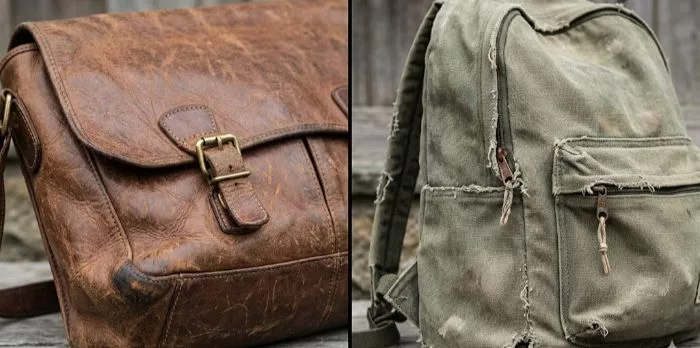
Durability is a system, not a single material property. Bags fail in repeatable places: strap anchors and D-ring tabs, zipper stops and slider abrasion, bottom corners and foot studs, handle roots, and coating delamination on cheap “leather-look” splits. A perfect hide does not save a weak strap joint.
We test materials on our factory floor with pneumatic pull-testers and load bags under the same gear a commuter carries. Typical outcomes we see (daily commute, five days a week — not a warranty):
- Full-grain leather at 1.6–1.8 mm, conditioned once or twice a year and stored dry: body still serviceable for 8–15 years. Hardware or the strap often needs work earlier.
- Unreinforced 10–12 oz canvas, heavily loaded: slouch, corner wear, and handle fray in 2–4 years.
- 18 oz waxed canvas, rewaxed annually and not machine-washed: the face can remain usable for 10+ years, with wax wear showing first at folds.
The non-obvious factory point: a heavy, tightly woven canvas with bartacks and a board base can beat a thin, heavily finished split leather in wet cities. Specify thickness, ounce, weave, and finish — not the category word.
🧠 Expert Take: Never assume “leather” automatically means durable. A highly dense 18 oz canvas will easily outlive a low-grade top-grain leather bag.
For a deep dive into how hide density dictates lifespan, refer to Horween Leather, one of the world’s most respected tanneries, for how premium hide is graded.
Best for long body-panel life (at the right thickness): full-grain leather.
2. Wear And Tear After 2 Years
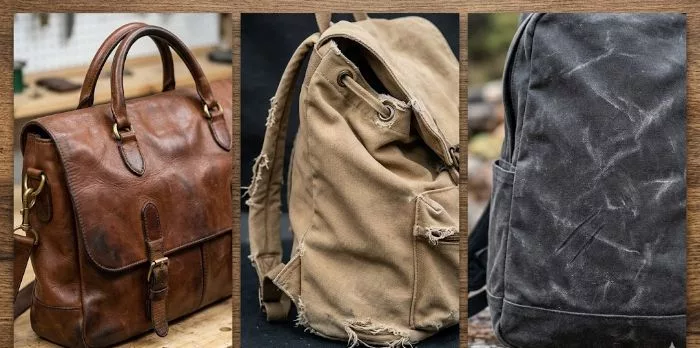
Two-year-old workshop archives reveal how materials age. Full-grain leather develops a dark patina, smoothing at contact points where it absorbs natural oils. Base corners take on a polished sheen, and creases across the flap create a molded look — a premium upgrade rather than simple wear.
Standard canvas shows a rougher story: unspooling fibers, frayed strap joints, panels that lose shape, and graphics that fade in the sun. Waxed canvas scuffs and shows pull-up marks instead of fraying, but it needs rewaxing to keep that look. Leather aging adds character; aged canvas looks tired unless it is maintained.
Best for elegant aging: full-grain leather.
3. Weight And Everyday Carry Comfort
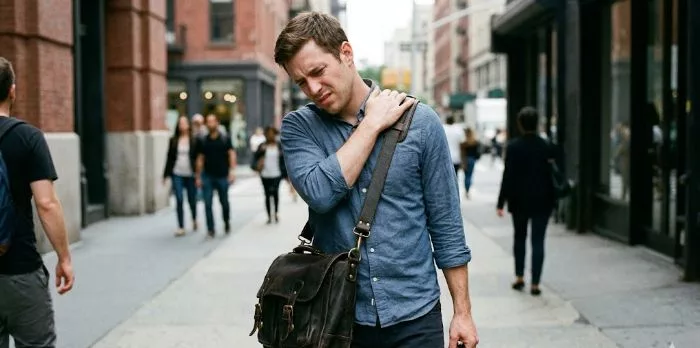
We loaded a standard canvas tote and a leather messenger with identical gear: a 15-inch laptop, a charging brick, a steel water bottle, and a hardcover notebook.
The empty-weight difference is what you notice first. A leather bag of the same silhouette runs roughly 3.5 pounds empty — before any gear — while the canvas bag comes in around 1.2 pounds.
Carried for a full day, the rigid leather strap digs into the collarbone and adds noticeable neck strain by midday. The canvas bag molds to the body and spreads the load. For commuters, teachers, and students carrying significant weight all day, heavy leather acts like an anchor. Canvas saves your shoulders and improves everyday carry comfort.
⚠️ Safety First: If you must carry a heavy leather bag for work, use a strap pad and keep the shoulder strap at least two inches wide to prevent nerve pinching in your neck.
Best for daily carry: canvas.
4. Water Resistance And Travel Use
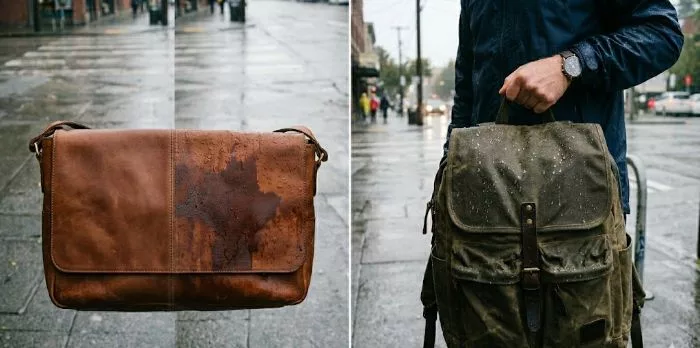
Plain canvas wets through in under thirty seconds of heavy rain. Untreated leather absorbs water, darkens instantly, and dries stiff and crusty if you force-dry it. Waxed canvas is the best of the three on the fabric face: rain beads and rolls off, and the interior stays dry.
But waxed canvas is water-resistant, not waterproof. Zippers, magnetic snaps, and stitch holes can leak after the face still beads, and fold lines plus low-temperature wax cracking are outside the fabric test. Ask for a panel spray rating rather than trusting a “waterproof bag” slogan.
ISO 4920 (textile fabrics — determination of resistance to surface wetting — spray test) rates how a fabric face beads water. It is not an IP rating for a finished bag.
When we spec waxed canvas for a wet-climate SKU, we write it on the tech pack as: waxed cotton, 18 oz, ISO 4920 spray rating ≥ 4 on the panel, tested before cut. Bag is water-resistant, not waterproof. Our incoming-QC spray results and lab notes are available on request for OEM projects.
Best for rain: waxed canvas — with the seams checked.
5. Cost, Maintenance, And Long-Term Value
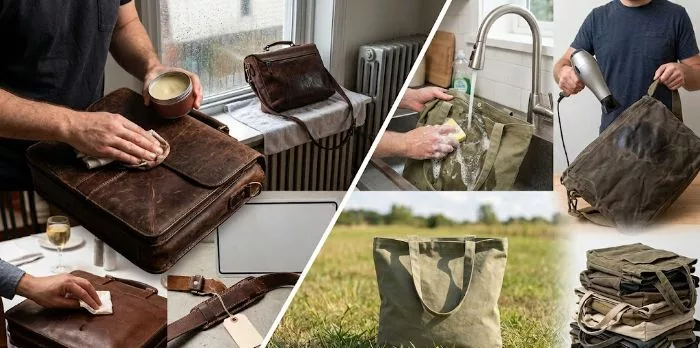
Full-grain leather costs the most upfront and demands the most care. We condition our leather bags roughly every quarter and keep them away from direct heat. Stitch repairs at a cobbler easily run $60 or more, and a zipper replacement or strap repair adds up over a decade.
Canvas is the low-maintenance, low-cost choice: spot clean, avoid overloading seams, and you have a no-fuss bag. Waxed canvas sits in the middle — it needs rewaxing when water stops beading, but nothing else.
Over a five-year horizon, the total cost of a canvas bag, including replacements, usually still lands below a single full-grain bag that has been repaired once.
Modern Textile Exchange sustainability standards show vegetable-tanning methods are rapidly improving to close the environmental gap with organic cotton — but eco claims should be verified per product, not assumed from the material name.
Best for value: canvas.
The Care & Repair Cheat Sheet
Leather: Wipe dry immediately after rain, stuff with paper, and dry at room temperature — no radiator, no hair dryer on the skin. Use a pH-balanced leather cleaner and condition when the face looks dry, not on a fixed schedule myth. Heat and sealed plastic bags cause more returns than “not enough oil.”
Canvas: Dry brush, spot with mild soap, and avoid saturating natural leather trims. Do not overload a single seam as a handle. A removable base insert does more for shape than a heavier logo patch.
Waxed canvas: Brush dry mud, rewax when water stops beading on the face, and never machine-wash or dry-clean — you will strip the finish. Thin, even wax coats beat heavy amateur coats, which can crack in cold shipping.
Which Should You Specify?
| If the user or brand needs… | Specify | Do not default to |
|---|---|---|
| Boardroom look, giftability, patina story | Full-grain, visible edge paint, quieter hardware | Shiny PU split labeled “leather” |
| Light everyday bag, price-sensitive drop | 12–16 oz canvas, bartacked handles, optional base | Fashion leather at canvas cost |
| Rainy commute, field, heritage | 14–18 oz waxed canvas + storm flap; say “water-resistant" | "Waterproof leather” claims |
| Airline personal item, all-day shoulder | Canvas or unlined leather; watch empty weight | A 3.5 lb leather bag plus laptop plus bottle |
| Outdoor weekenders that get dirty | Waxed canvas | Untreated veg-tan as a rain shell |
For Brand and OEM Buyers: How We Write the Spec
Retail articles stop at “leather vs. canvas.” A factory purchase order cannot. Before sampling, we ask for the minimum spec on every SKU:
- End use and climate — office, travel, wet city, or outdoor
- Target empty weight
- Leather: tannage, thickness in mm, grade (full-grain / top-grain / split), finish
- Canvas: fiber, ounce or GSM, weave, dye method, coating or wax add-on
- Test methods that matter for this SKU — name the ISO/AATCC method and the pass value
- Reinforcement map — base, corners, strap anchors
- Hardware finish plus salt-spray or tape-test if claimed
- Care card language that matches the finish — never “machine wash” on waxed canvas
Common cost drivers buyers miss:
- Leather: hide yield, belly vs. bend, color-match rejects
- Canvas: ounce jumps and special colors
- Waxed canvas: handling dirt in sewing, longer presser-foot cleaning, extra QC for wax rub-off
- Both: lining GSM, and whether the bag is structured
⚡ Power Move: Request a material card — leather thickness swatches, a canvas ounce ladder, and one waxed panel with the spray-rating note we use internally.
Then contact our manufacturing team to compare materials against your target price and lead time.
People Also Ask About Leather vs. Canvas
1. Is leather more durable than canvas?
Not automatically. Full-grain leather of the right thickness usually outlasts light cotton canvas on the body panel. Dense 18 oz canvas, especially waxed, can outlast thin or coated split leather — particularly in rain. Specify thickness, ounce, and construction rather than trusting the category name.
2. Is untreated leather good in the rain?
No. Untreated leather absorbs water, can stain, and may stiffen if force-dried. Use a treated leather, a rain cover, or waxed canvas when wet weather is the main job.
3. Is waxed canvas waterproof?
No. Waxed canvas is typically water-resistant on the fabric face. Seams, zippers, and stitch holes are the first leak paths. Ask for a panel spray rating, not a “waterproof bag” slogan.
4. What canvas ounce is closer to leather for daily bags?
For unstructured messengers and totes, we usually start the discussion at 14–18 oz if the buyer wants canvas to hold shape. 10 oz is a packable or shopper weight, not a leather substitute.
5. Which is cheaper to manufacture?
Canvas, if the ounce and print are standard. Leather costs more in material yield and finishing. Waxed canvas sits in the middle and adds sewing-house cleanup time.
6. Can you mix leather and canvas?
Yes. A common OEM build is a canvas or waxed-canvas body with leather handles, base, and zipper garage. Specify the leather thickness and the canvas ounce separately — they age and wet out differently.
Sources and Methods
- ISO 4920, Textile fabrics — Determination of resistance to surface wetting — Spray test. Used here to explain what a fabric spray rating does and does not prove for a finished bag.
- Textile Exchange — Materials: Leather for environmental comparisons and vegetable-tanning improvements.
- Horween Leather Co. for hide grading and premium tannery practice.
- Patagonia Worn Wear repair FAQ on why patched canvas rarely regains its original structure.
- Empty-bag weights and lifespan ranges are LantaoBags workshop observations for similar messenger and tote silhouettes, not warranty guarantees. Incoming-QC spray and abrasion reports are available on request for OEM projects.